LZ 127 Graf Zeppelin
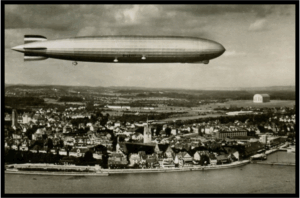
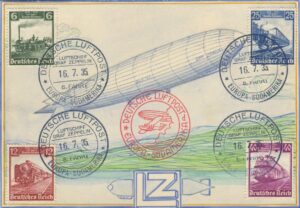
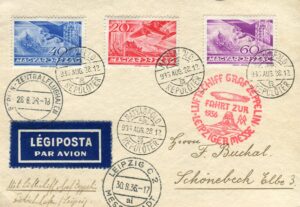
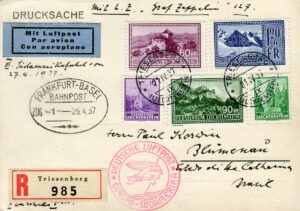
The Graf Zeppelin, designated “LZ 127” by the Zeppelin Company, was the most successful lighter-than-air ship in aviation history. Over the course of ten flying seasons from 1928 to 1937, the airship completed 590 flights, carrying mail on most of them.
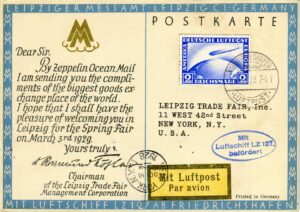
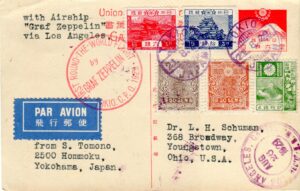
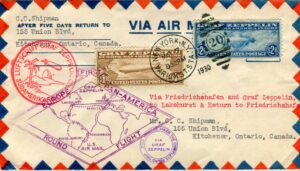
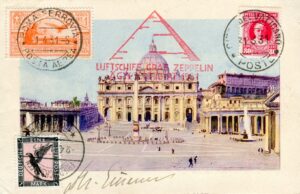
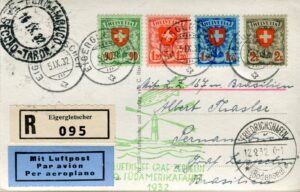
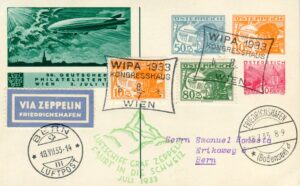
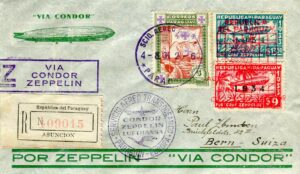
Apart from German mail and mail from the countries it visited, the Graf Zeppelin carried transmitted mail (sometimes called “contract mail” or “treaty mail”) from dozens of other countries. Most of the mail-carrying flights and much of the transmitted mail will be shown in this catalog, which will be continually updated.
The Graf Zeppelin, named for Count Ferdinand von Zeppelin, was christened by his daughter on July 8, 1928, which would have been the Count’s 90th Birthday. The ship was housed at a large hangar at Friedrichshafen, southern Germany, on the shores of Lake Constance, also known as the Bodensee. It was there in 1900 that Count von Zeppelin had launched his first airship, and 28 years later, that fledgling effort had evolved into a sophisticated airship operation that would see incredible achievements in the coming years. In short order, the Graf Zeppelin would circumnavigate the globe, visit the polar regions, establish regular passenger and mail service to South America, carry more than 34,000 passengers, and fly over 1 million miles.
The mail in this catalog documents that history, from the airship’s first flights in 1928 to its final round trip journey to Brazil in May of 1937. After the Hindenburg disaster that month, the Graf Zeppelin was retired to a new home in Frankfurt, Germany, where it was co-located with the newly-built LZ 130 Graf Zeppelin. The LZ 127 remained on static display there until 1940, when the Air Ministry in Berlin ordered it broken up and its Duralumin frame melted down and used to build military aircraft parts.